
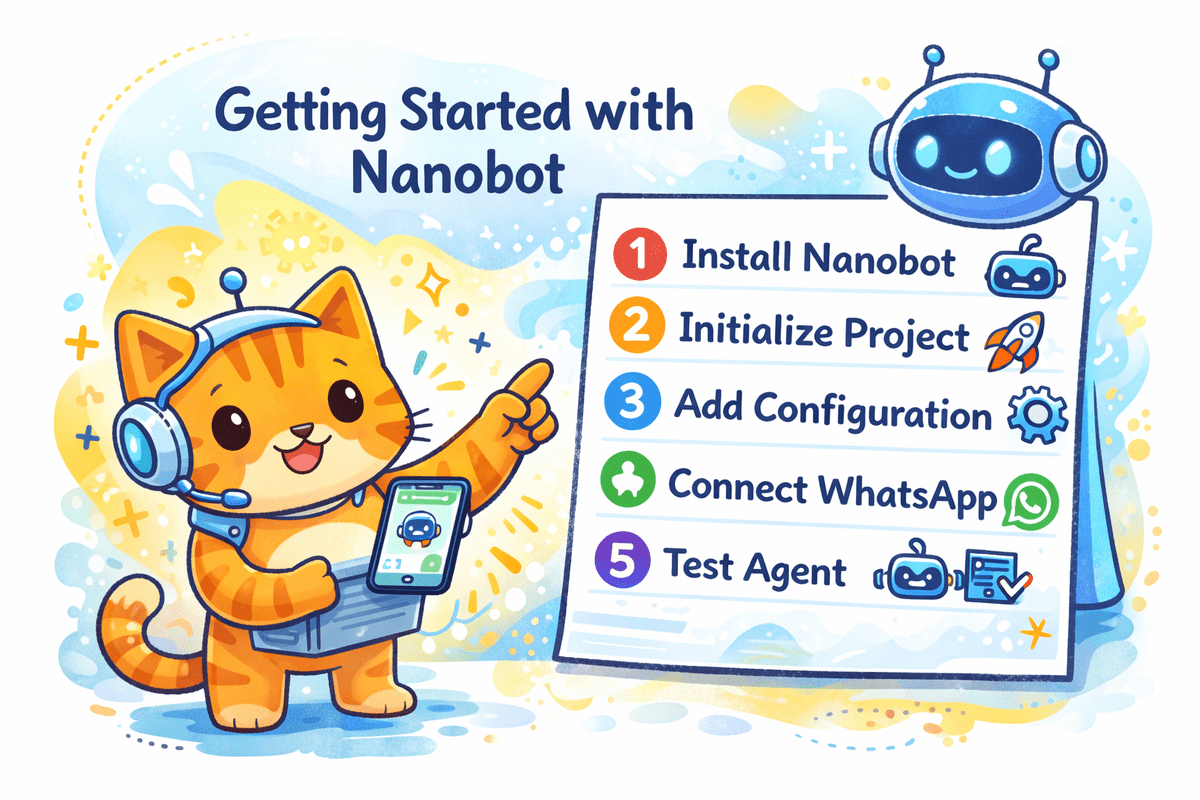
Photo by author
# Introduction
I was looking for an alternative to OpenClaw, not because it isn’t useful, but because it can feel too heavy and bloated for simple day-to-day use. I wanted something lightweight, easy to set up, and easy to connect to WhatsApp without going through a lot of complicated steps. That’s when I came out Nanobot on GitHub, and I also noticed that a lot of people are starting to talk about it on YouTube.
In this tutorial, we will explore the architecture of Nanobot and how it works. Then, in six easy steps, we’ll walk you through installation, setup, and connecting. WhatsApp So you can start using it as a 24/7 artificial intelligence (AI) agent for a wide range of tasks.
# Using Nanobot for your first AI agent
Nanobot is a great choice for a first AI agent because it keeps the overall setup simple while still supporting features that are important in real-world use. It can connect to messaging platforms such as WhatsApp, Telegram, Slack, Discord, Facebook, QQ, and email, while also working with a wide range of model providers and Model Content Protocol (MCP) tool servers. This gives beginners a clear way to understand what an agent is without starting with a system that feels overly complicated.
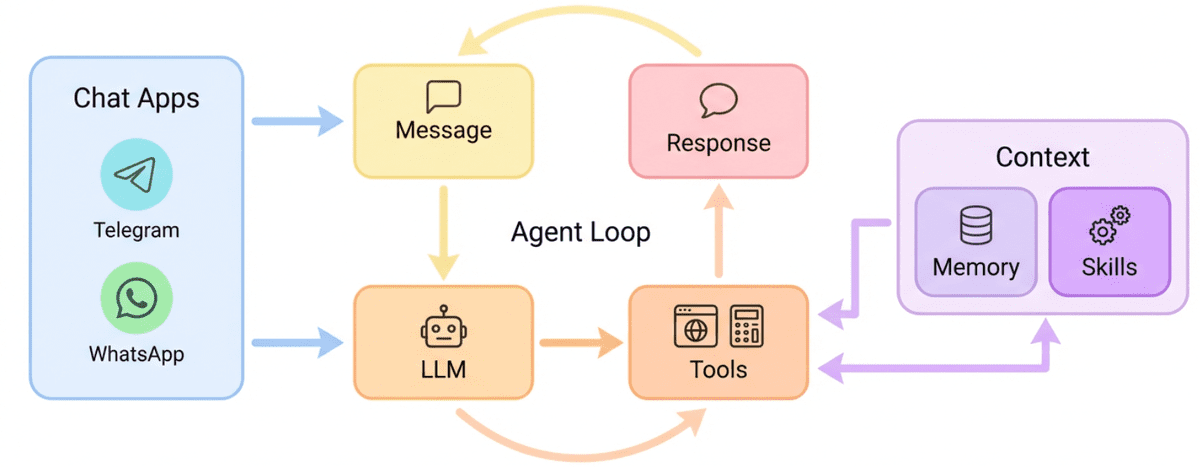
Nanobot Architecture | Photo from HKUDS/nanobot
It also stands out as an alternative to OpenClaw as it offers practical integration and day-to-day usability right from the start. Along with messaging channels, the tool supports calling, web search, scheduled tasks, voice transcription, real-time progress streaming, and multiple provider options, making it easy to turn it into a useful personal assistant rather than a demo project.
# Step 1: Installing UV
First, install uvwhich Nanobot uses to manage the Python environment and dependencies. Then, verify that it was installed correctly by checking the version.
curl -LsSf | shCheck the installation:
Output:
uv 0.10.9 (f675560f3 2026-03-06)# Step 2: Installing Nanobot
once uv is installed, use it to install the nanobot package. It will add the Nanobot Command Line Interface (CLI) so that it can be launched directly from the terminal.
uv tool install nanobot-ai
# Step 3: Starting Your Nanobot Project
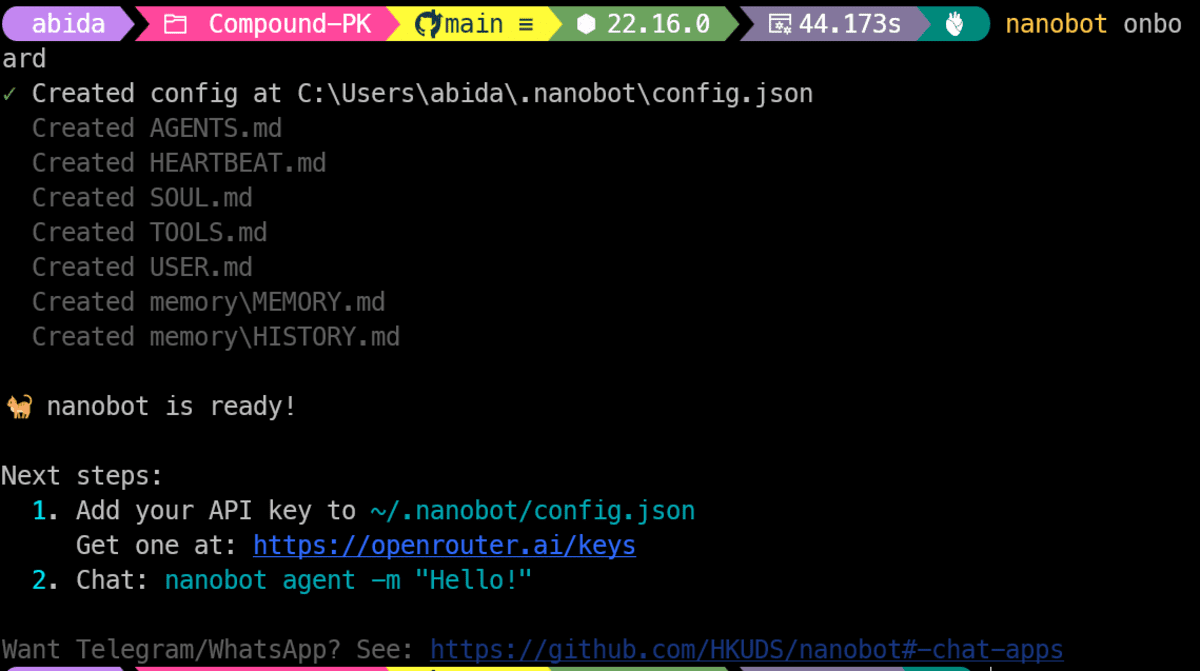
Next, run the onboarding command to start nanobot.
This creates the basic local setup, including the default configuration directory at ~/.nanobot And the workspace Nanobot uses to store its files. After this step, Nanobot is ready for provider, model, and channel configuration.
# Step 4: Adding Your Nanobot Configuration
Visit yourself. ~/.nanobot/config.json file, then copy and paste the configuration below. Before saving, replace the placeholder values with your own. Open AI API Key, Model, and WhatsApp Number.
{
 "providers": {
   "openai": {
     "apiKey": "sk-REPLACE_ME"
   }
 },
 "agents": {
   "defaults": {
     "model": "openai/gpt-5.3-codex",
     "provider": "openai"
   }
 },
 "channels": {
   "whatsapp": {
     "enabled": true,
     "allowFrom": ("1234567890")
   }
 }
}
Before saving, edit:
apiKeywith your original OpenAI API keymodelIf you want to use a different model.allowFromWith your WhatsApp number
An important note – the recent Nanobot issues suggest that WhatsApp allowFrom The formatting can be a bit inconsistent in practice, and some users report that it works better without the “+” sign depending on their particular setup.
# Step 5: Connecting Nanobot to WhatsApp
Before starting the WhatsApp login flow, make sure that Node.js And NPM installed on your machine, because WhatsApp Bridge goes through a node-based process.
First, start a login flow in a terminal:
nanobot channels login whatsapp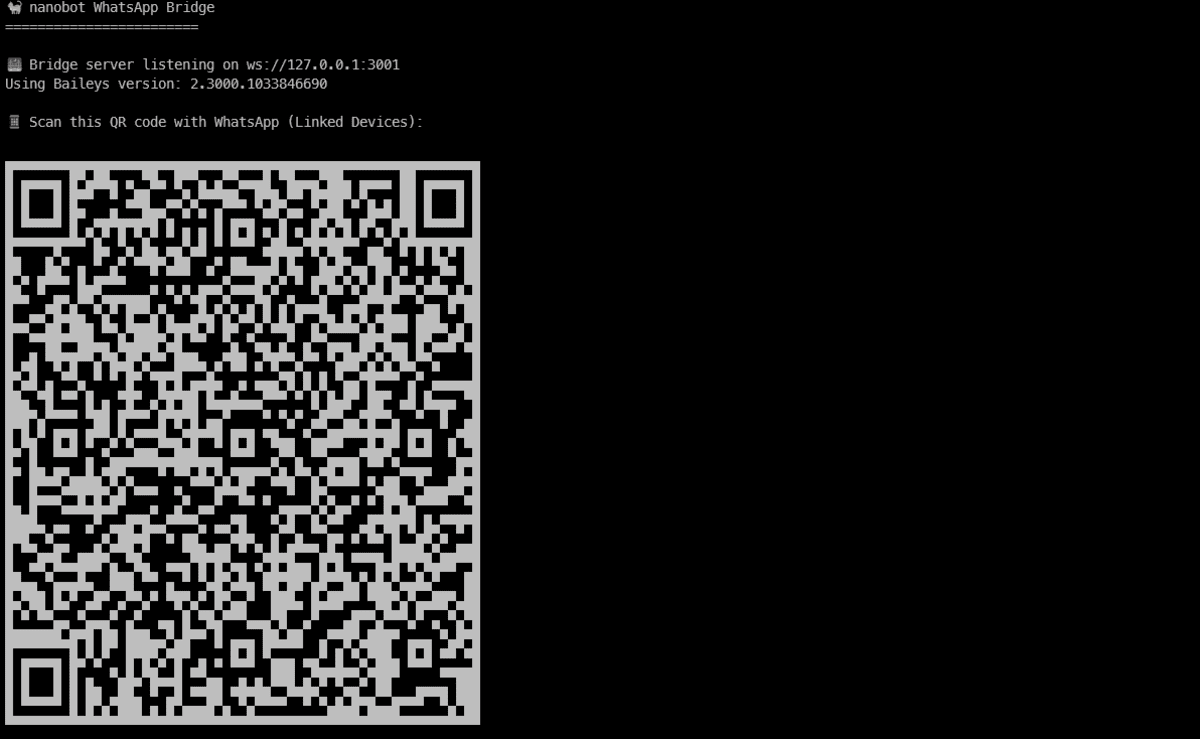
This will generate a QR code that you need to scan. WhatsApp → Settings → Linked Devices After the device is linked to your phone, open another terminal and start Nanobot Gateway:
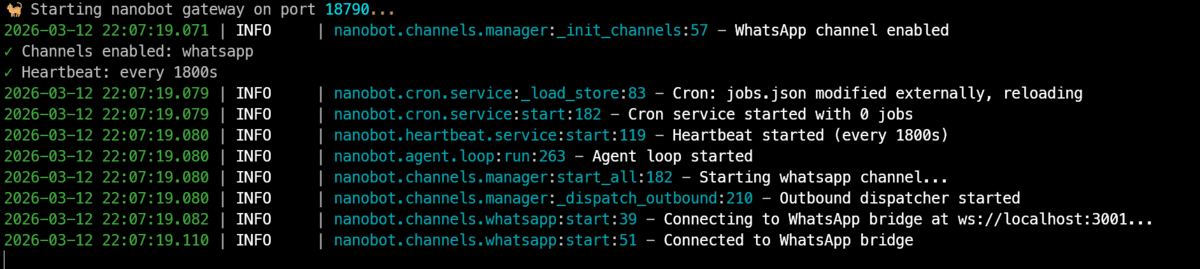
This is the process that keeps the channel running so that Nanobot can receive and respond to WhatsApp messages.
# Step 6: Testing your AI Agent on WhatsApp
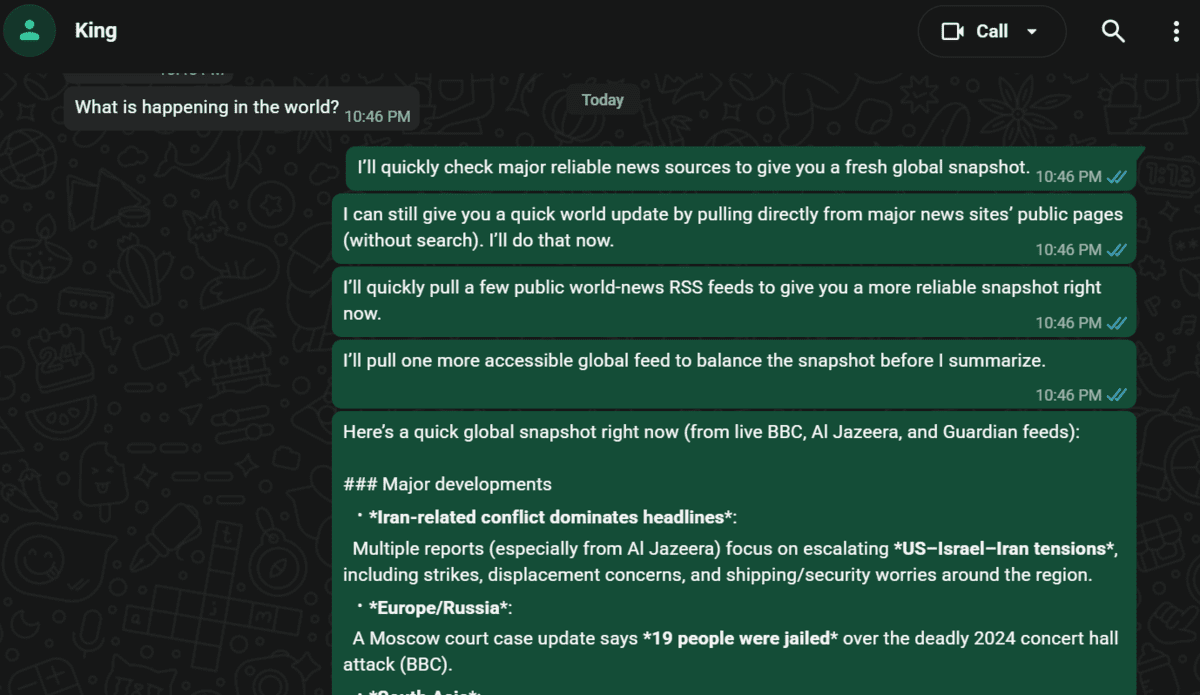
To test the agent, you’ll need another phone. This second phone number should already be added. allowFrom list in your configuration file. When you send a message to the first phone number associated with Nanobot, it should respond via WhatsApp.
In this example, the prompt asks what’s going on in the world. Nanobot then processes the request, performs a web search if tools are enabled, and returns a detailed snapshot based on the latest information.
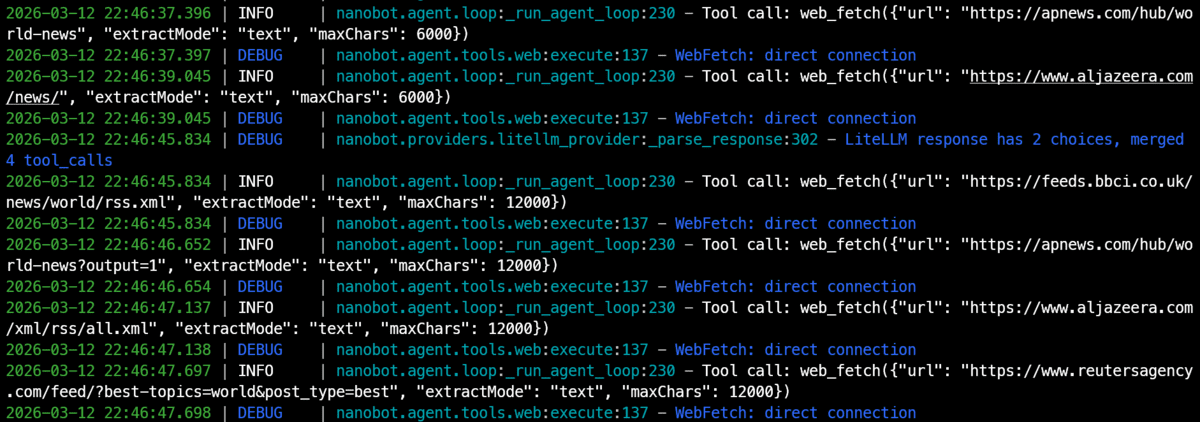
When the Gateway Terminal is running, you can observe the agent’s complete workflow in real time. This includes receiving the message, calling tools, generating the response, and sending the response back, making it easy to verify that everything is working correctly.
# Final thoughts
Setting up Nanobot showed me that building a personal AI agent doesn’t have to be overly complicated, although it wasn’t completely friction-free. I appreciated how quickly I could move from a terminal setup to a working WhatsApp-connected agent that provided practically useful responses.
However, I ran into a few minor hurdles. On Windows, if Node.js or npm were already installed in a certain configuration, the Python script would sometimes fail to correctly detect npm in the terminal, which made the initial setup a bit confusing. Additionally, the lack of extensive WhatsApp documentation meant that it wasn’t immediately clear that the interface worked by directly messaging the connected device rather than a separate bot chat interface.
Despite these minor issues, Nanobot is a solid starting point for anyone looking to build their first AI agent. It provides a basic agent experience without the overhead of heavy alternatives. Once the setup is operational, its value is immediately apparent, bridging the gap between simple terminal commands and a truly helpful personal assistant.
Abid Ali Awan (@1abidaliawan) is a certified data scientist professional who loves building machine learning models. Currently, he is focusing on content creation and writing technical blogs on machine learning and data science technologies. Abid holds a Master’s degree in Technology Management and a Bachelor’s degree in Telecommunication Engineering. His vision is to create an AI product using graph neural networks for students struggling with mental illness.