
Despite the growing focus on children’s health, sugar consumption among Indian school children is alarmingly high. Recent studies point out that children aged 4–10 years get about 13% of their daily energy from sugar, and those aged 11–18 years about 15%, which is even higher than the recommended limit of about 55%. It called on CBSE to educate students and families to install sugar boards in schools.
The key path
- Sugar boards in schools help students identify hidden sugars and make healthy daily food choices.
- They address growing concerns about sugar consumption and unhealthy canteen options among school-aged children.
- Schools can use sugarboards through strategic placement, curriculum integration, and regular awareness activities.
- These boards support the goals of NEP 2020 by promoting health literacy, responsible choices and life skills.
- Parent-school support reinforces the effects of the Sugar Board through healthy home habits, nutrition discussions, and healthy lunchbox practices.
What are Sugar Boards?
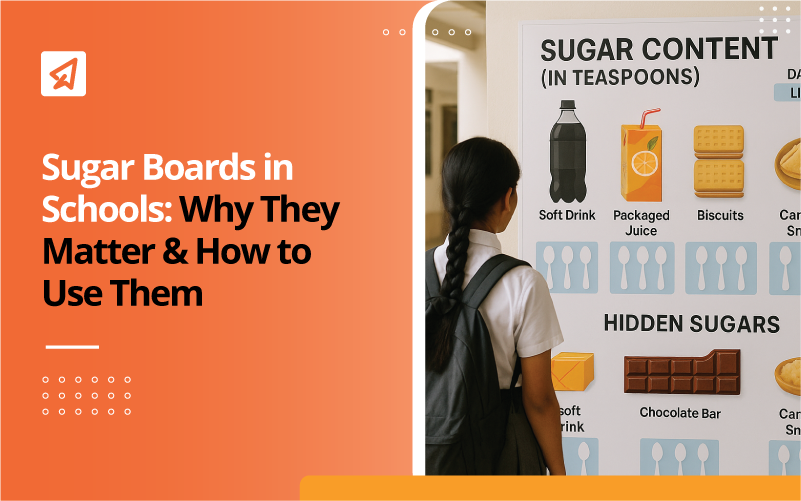
Sugarboards are simple, display panels placed in school spaces, such as canteens, corridors, or assembly halls. These displays show how much sugar is in everyday foods and drinks, usually measured in teaspoons. These include daily recommended limits, sugar content of common canteen items, examples of “hidden” sugar ingredients, and color-coded guidance for quick scanning. The boards are intended as ongoing food literacy indicators: short, repetitive nudges that help kids and parents make healthy choices.
Why do schools need sugar boards?
Below are the main reasons why schools should adopt sugar boards, explained with context and evidence.
Growing health concerns
Childhood overweight, obesity, and early-onset type 2 diabetes are increasing in India and globally. UNICEF reports Increasing trends in overweight among children and adolescents link these changes to an unhealthy food environment and greater availability of ultra-processed, sugar-rich products. It is a public health problem that begins in childhood and continues into adulthood.
Excessive sugar consumption
Recent reporting Pediatric data and expert reviews show that children in India consume sugar above recommended limits, often teaspoons more than the WHO recommended threshold. This excess intake is driven by hidden sugars in sugary drinks, packaged juices, sugary snacks, and processed foods.
Easy access to unhealthy food
Canteens, street vendors, and packaged snacks are the default convenience choice for many children. Individual schools are used to changing this default by educating students and managing on-campus dining options.
Lack of awareness
There is less focus on banning sugar boards in schools and more on food literacy. When students see how many teaspoons of sugar are in a familiar drink or snack, the shock factor helps change behavior more effectively than an abstract health warning.
Aligning with NEP 2020
NEP 2020 emphasizes child development, health education, and school-based interventions. Sugar boards are a low-cost, scalable way to align school health practice with these priorities and CBSE guidelines, supporting school health literacy.
Learn more about NEP (National Education Policy) 2020
How to use sugar boards in schools
- Strategic Placement: These boards should go where students congregate, such as canteens, assembly halls, and playground entrances, so they see the messages frequently.
- Curriculum Integration: Teachers can connect these boards to health lessons, assemblies, and workshops so that the messages reinforce classroom learning.
- Parental Engagement: Schools can use PTA meetings, WhatsApp groups, and newsletters to share sugar board facts and encourage healthy lunch boxes at home.
- Monitoring and Accountability: As per recent CBSE guidance, upload photos and short activity reports to demonstrate implementation and awareness efforts in schools.
What to display on sugar boards in schools?
A well-designed sugar board in school keeps information simple, visual and easy for students to understand. Instead of using complicated nutrition data, the board should focus on clear comparisons and familiar examples. Schools may include elements such as:
- Recommended Daily Sugar: Clear, age-appropriate guidance that parents and children can follow.
- Hidden Sugar Awareness: Everyday products can contain unexpected amounts of sugar and how to read labels. You can also include a list of examples of hidden sugar ingredients.
- Color coded categories: A simple green/yellow/red system helps children understand which foods are okay every day, which are sometimes okay, and which should be treated occasionally.
- Health Risks: Short, relevant facts linking excess sugar to health risks such as weight gain, low energy, dental cavities and long-term risk of type 2 diabetes.
- Healthy alternatives: Make practical substitutes like fruit, yogurt, nuts, or plain milk flavored with cardamom/cocoa at home.
How to involve parents in the process
Teachers are central to translating school messages into home behavior. Here teachers can involve parents in the process.
- Parent Orientation: Run short sessions during the PTA to display the sugar board at school, explain the dangers, and model healthy lunchbox ideas.
- Sugar diary at home: Encourage students to try a one-week “sugar diary” with a simple checklist or photo log of drinks and snacks, and then give a short 5-minute class discussion about the results.
- Monthly Nutrition Challenge: Set friendly challenges like “no junk food for a week” or “five days of fruit lunch boxes.”
The result
Sugar boards at school are a practical, low-cost intervention that helps students see, understand and reduce their sugar intake. By turning summary health guidance into visible, relevant comparisons, schools can change eating habits day by day. When combined with parent engagement, canteen policy changes, and curriculum-supported health lessons, sugar boards become part of a sustainable approach to raising healthier, more informed kids!
Last updated on December 17, 2025

Priya Kapoor | AVP – Academics
Priya Kapoor is an education professional with over 18 years of experience in a variety of fields, including elearning, digital and print publishing, instructional design, and content strategy. As the AVP – Education Specialist, she guides the academic teams in developing tailored educational solutions, ensuring alignment with various curricula across national and international platforms…Read more
